Contents 6 sections
For decades, the sun protection factor (SPF) was measured on the skin of volunteers. The principle: compare the UV dose that causes slight redness, with and without the product. In 2024, two ISO standards opened another route. The first needs no volunteers at all. The second measures on the skin, without causing redness.
For a brand preparing a sun care product for summer 2027, the question is practical: which method should you ask the testing laboratory for, and what is an SPF already measured with the classic method worth?
Why look for another method?
The European Commission said so as early as 2006. In Recommendation 2006/647/EC on sunscreen products, it keeps the volunteer method as the reference, but adds that preference should be given to an in vitro method giving equivalent results, because in vivo methods raise ethical concerns. It asked industry to develop such methods.
The same text recalls a point many consumers are unaware of: the SPF on the label is measured with a precise amount of product, much more than people usually apply.
- 2mg/cm²
- amount of product used to measure SPF
- 36g
- about 6 teaspoons, for the body of an average adult
- 2/3
- less protection possible when half the amount is applied
Commission Recommendation 2006/647/EC
What are the two new methods?
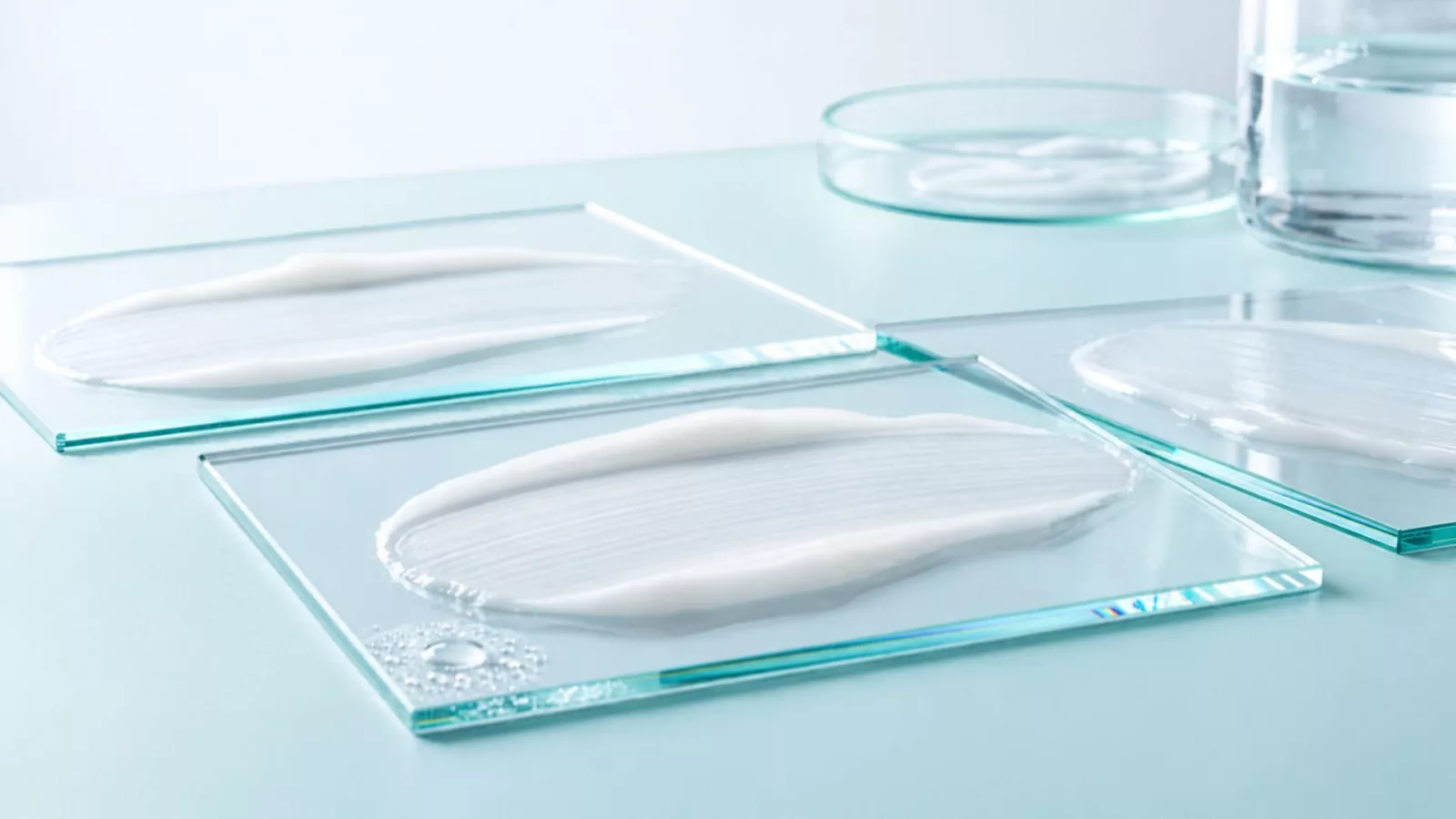
ISO 23675:2024, known as « Double Plate ». A robot applies the product to UV-transparent plates, then its protection is measured with a spectrophotometer. No volunteers are involved. Automated application aims to reduce variability between tests.
ISO 23698:2024, known as HDRS (hybrid diffuse reflectance spectroscopy). It combines a full-spectrum in vitro measurement with a measurement on the skin, using reflected light, in the UVA range. The product is still tested on people, but without exposure that causes redness. It gives the SPF, the UVA protection factor and the critical wavelength.
Three methods for the same number
| ISO 24444:2019 | ISO 23675:2024 | ISO 23698:2024 | |
|---|---|---|---|
| Type | In vivo | In vitro (Double Plate) | Hybrid (HDRS) |
| Volunteers | Yes | No | Yes |
| Redness induced | Yes | No | No |
| Measures | SPF | SPF | SPF, UVA-PF, critical wavelength |
What do the validation studies show?
Both methods were compared with the volunteer reference method by an international consortium, ALT-SPF, in large inter-laboratory ring tests. The results were published in 2025 in the International Journal of Cosmetic Science.
Double Plate. Five laboratories tested about 32 sun care products with varied formulations, both on volunteers and with Double Plate. Reproducibility was very high, within a single laboratory and between laboratories. The method initially showed a bias against the reference: a mathematical adjustment was introduced, then checked on 12 additional products. After this adjustment, results are close to those of the volunteer method. The study was funded by the ALT-SPF consortium and by Cosmetics Europe, the European industry federation.
HDRS. A first series of tests showed good accuracy, but higher variability for some product types. After further operator training, a second series gave variability equivalent to the reference methods, and almost all values fell within their prediction intervals. The authors work for companies including Beiersdorf, L’Oréal and Kenvue.
Do mineral filters cause a problem?
The question matters for zinc oxide sunscreens. One article had suggested that alternative methods measure this type of product poorly. A study published in 2025 in Photochemical & Photobiological Sciences replies that this article relied on in-house in vitro methods, not on ISO 23675. Its authors measured zinc oxide sunscreens according to the standard and conclude that it reliably measures products with mineral filters, even at high concentrations.
Here too, the authors are employees of large cosmetics groups (Coty, L’Oréal, Pierre Fabre, Beiersdorf, LVMH, P&G). The debate is not entirely closed, but the original objection did not concern the standard itself.
Is an SPF already measured still valid?
That is the practical question for a range already on shelf. Cosmetics Europe published a recommendation to its members in June 2025. It is the industry position, not a regulation. It says three things.
- SPF values measured with the volunteer method ISO 24444:2019 remain valid and compliant: nothing requires these products to be retested.
- For new products, SPF can be expected to be determined preferably with one of the two new methods.
- If a third party retests a product with another method and finds a significantly lower SPF, the federation recommends repeating the test with the original method, in a different laboratory, taking the company’s data into account.
The recommendation also stresses one point: the manufacturer must keep a well-documented file supporting the SPF on the label.
Preparing the SPF test for a new sun care product
- 01Choose the method early
Decide with the testing laboratory, as early as formulation, which method will be used for SPF and UVA protection.
- 02Check the laboratory’s experience
Both methods require specific training. Ask how long the laboratory has been using them.
- 03Test the final formula
An SPF measured on an intermediate version does not cover the formula placed on the market.
- 04Document the file
Keep reports, method and laboratory details: they are your evidence if the product is retested.
Sources
- Commission Recommendation 2006/647/EC on sunscreen products, Official Journal of the European Union, 2006.
- Cosmetics Europe, Recommendation No. 26 on the use of alternative methods to ISO 24444:2019, revised June 2025 (industry position).
- Pouradier F. et al. Performance assessment of the Double Plate method (ISO23675) in ALT-SPF Consortium. International Journal of Cosmetic Science, 2025. DOI 10.1111/ics.13088
- Ruvolo E. et al. Performance of hybrid diffuse reflectance spectroscopy (HDRS-ISO 23698) methodology for assessment of sunscreen protection in the ALT-SPF Consortium validation study. International Journal of Cosmetic Science, 2025. DOI 10.1111/ics.13089
- Pissavini M. et al. The double plate in vitro SPF test method (ISO23675:2024) is a reliable means of measuring the performance of sunscreen products with high concentrations of zinc oxide and inorganic-only UV filters. Photochemical & Photobiological Sciences, 2025. DOI 10.1007/s43630-025-00798-5
Further reading
 Article
Stability, challenge test, packaging: what your formula must prove before launch
An approved formula is not yet a product ready to sell. Stability, microbiological quality, packaging compatibility: what the EU …
 Article
Microplastics: which skincare is affected, and when?
Rinse-off products are next, from 17 October 2027. The EU restriction goes well beyond microbeads. Here is how to find out whethe…